You post a sunrise shot from a Patagonia trail, watch the first hour of likes, then nothing. The image is sharp and the caption is honest. What lets it down is the tag line underneath: #travel, #wanderlust, #photooftheday, and two more broad terms that drop the post into a feed moving faster than anyone can browse.
Broad travel tags carry real scale. By May 2017, more than 160 million Instagram posts used #travel, and the platform recorded up to 1 million travel-related searches each week; the same reporting found that as many as 50% of travel enthusiasts used Instagram to find local places to explore, including day trips, according to Social Media Today's analysis of Instagram travel trends. Scale like that keeps a mega-tag useful as a label. It's a poor discovery channel for a single post.
The fix is rarely more hashtags. It's the right set for the trip type you took, with the location and the format adjusted before you publish.
Ten sets follow, one per travel style. Each is built the same way, from a location tag, a theme tag, and a niche tag, so you can rebuild it for any destination in a minute. Placement and formatting mechanics are covered thoroughly in PostNitro's hashtag best practices, so this guide stays on what goes inside the set. AI content generation now drafts platform-specific captions and hashtag suggestions in seconds, and a social media scheduler can hold your best sets as reusable groups instead of making you retype them for every post.
1. City Break Hashtag Sets for Urban Destinations
A city post serves two audiences at once. One is planning a specific trip and searching the city name. The other is browsing urban travel content with no destination in mind. A set that pairs a precise city tag, a wider geographic tag, and one urban theme tag reaches both, and if you're still choosing where to go, compare European weekend city trips before you build the set around one place.
The layering has research behind it. A study of 13,217 Instagram posts from 18 small Italian destinations during the 2019 high-tourism period found that combining a niche destination hashtag with hashtags for the surrounding region or nation could improve likes, though the effect was small, according to a Ca' Foscari University working paper on destination hashtags. Small is fine here. The wider tag isn't there to spike reach, it's there to give the platform context about where the city sits.
Start with the city, then widen the map
- The city tag: #lisbon on the English caption, #lisboa alongside it so the local audience finds the same photo.
- The wider area tag: #portugal or #europetravel, which places the city inside a region.
- The theme tag: #citybreak or #cityexplorer for browsers, plus one neighborhood tag such as #alfama or #shibuya.
A set built this way looks like a Lisbon tram-route post tagged #lisbon, #lisboa, #alfama, and #citybreak, or a Tokyo nightlife Reel tagged #tokyotravel, #shibuya, and #citylights.
Rotate one neighborhood tag per post. Five posts about five districts cover a city better than five posts all tagged #downtown.
A tram shot from Alfama is the classic version of this set, and it's the one that repays a second location variant.

Save the finished set in a social media scheduler such as iHatePosting, and the next city post becomes a two-tag edit rather than a rebuild.
2. Island and Beach Destination Hashtag Sets
Beach content is the most crowded travel category on the platform, and it's where precision beats volume hardest. The island tag does the heavy lifting. The surrounding coastal tags decide whether a planner or a browser ends up seeing the post.
Destination consideration happens on Instagram at a scale worth planning around. Tourism Northern Ireland reported that #travel and #vacation were each used more than 200 million times per month on the platform, and that 48% of people wanting to choose a destination used Instagram as their go-to social network, as noted in Tourism Northern Ireland's Instagram guidance for tourism businesses.
The three-tag core for coastal posts
- The island tag: #bali, #maldives, or #santorini. One per post, never three at once.
- The regional tag: #greekislands or #indianocean, which catches itinerary planners building a multi-stop trip.
- The mood tag: #beachlife, #islandvibes, or #sunsetlovers. One, not five, because these tags are enormous and interchangeable.
A Santorini sunset carousel tagged #santorini, #greekislands, and #sunsetlovers is close to a complete set. A Bali rice-terrace Reel tagged #bali, #balitravel, and #tropicaltravel covers the island and the activity.
If you want to see how a reusable group is assembled before building your own, browse hashtag groups for nonprofit posts and study the structure, then swap the cause tags for coastal ones. A beach shoot also means sand in everything, so compare sand-resistant travel totes if camera gear is coming onto the sand with you.

Post destination sets in the local shoulder season, when planners are still researching, and check that the location tag you attach shows travel content before you use it.
3. Nature and Outdoor Adventure Hashtag Sets
Outdoor audiences save more than they comment, which keeps a good route post circulating for weeks. They also search by park and trail name rather than by mood, so a nature set leans on exact names where a beach set leans on feeling.
Tag mechanics matter before you build. Per Instagram Help Center guidance on hashtags, numbers are allowed while spaces and special characters such as $ and % are not, and posts from private profiles never appear on hashtag pages. How many tags you attach is a strategy choice, not a platform cap. Four well-matched tags beat a dozen loose ones.
A four-part set for a Yosemite post
- The park tag: #yosemite, spelled exactly as visitors search it.
- The category tag: #nationalparks, which reaches people collecting parks rather than following one.
- The format tag: #naturephotography for a still, #hikingreels for video.
- The niche tag: the trail name, or #sunrisehike when the trail has no search volume of its own.
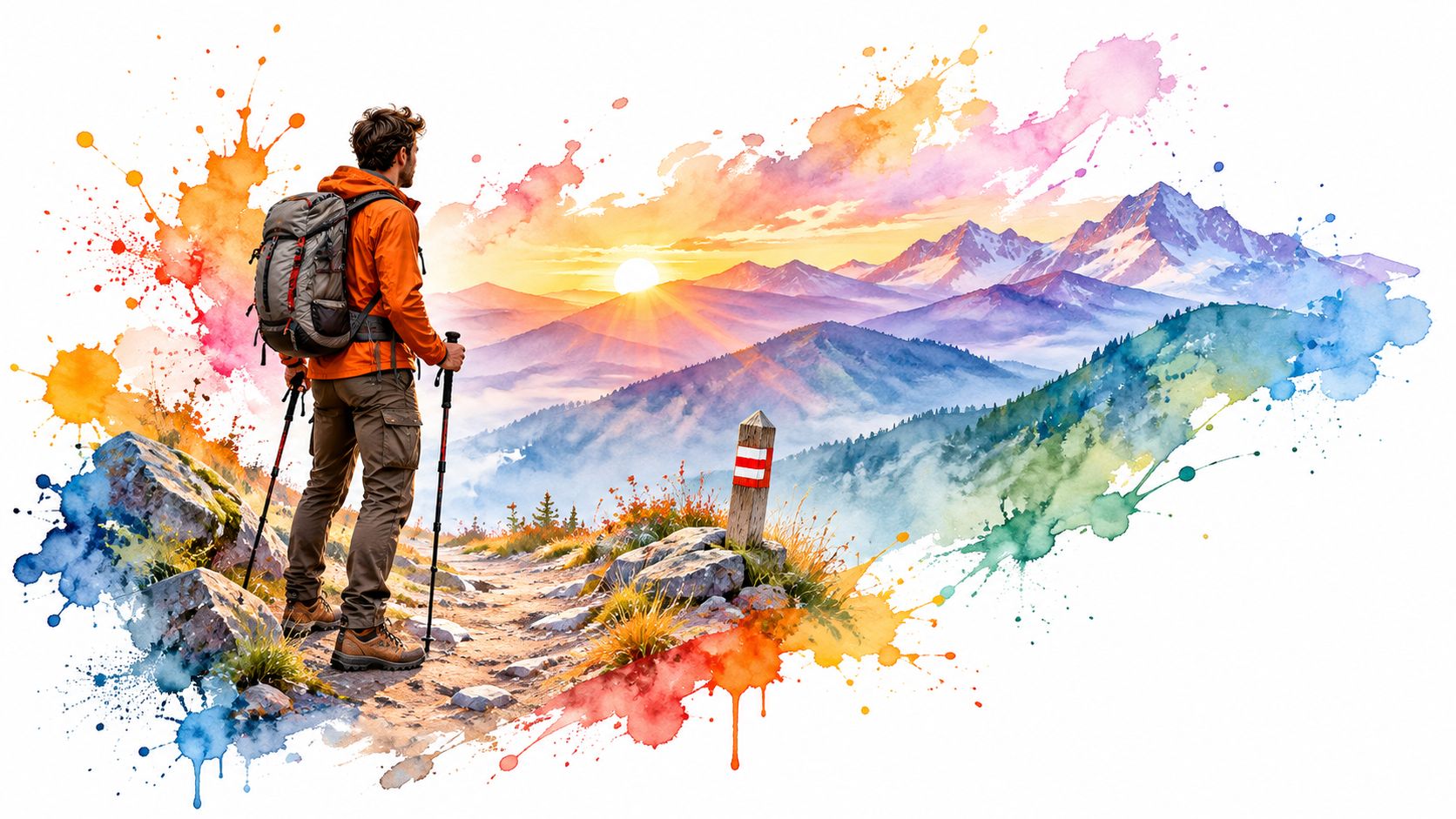
A Patagonia trekking post tagged #patagonia, #hiking, and #wildernesstravel covers the same ground at a different scale. Build the four parts once, then swap only the park and trail tags when the location changes. The category and format tags carry over untouched.
Narrow seasonal tags carry more weight than their size suggests. DiscoverCars counted 61,461 Instagram uses of #DutchFlowers in its 2024 analysis of spring travel hashtags. That is small by travel standards and precise, which is exactly what a flower-field or wildflower post needs.
Name the trail or park in the caption as well as the tags. The caption gives the platform words to match, and the tag gives it a category.
4. Solo Travel Hashtag Sets
Solo travel posts fail in one specific way. The caption says "you can do it too," the tags say #travel, and the post reaches everyone while speaking to nobody.
#solotravel and #solotraveler are communities with their own norms, and most people inside them are mid-planning: comparing safety, daily costs, and how a first solo trip actually starts. The tags do more than reach those people. A 2019 study of 606 Indonesian travellers found that hashtag and geotag use improved travellers' satisfaction, with information seeking, chronicling experiences, and etiquette shaping hashtag use, published in Asia Pacific Journal of Tourism Research.
What a first-trip post should carry
- The community tag: #solotravel or #solotraveler, used only if the post serves that audience.
- The intent tag: #solotraveltips or #travelplanning, which promises an answer rather than a view.
- The identity tag: #womenwhotravel when it's accurate and useful, not as decoration.
- The place tag: the city or region, because solo advice without a location is hard to act on.
A packing carousel tagged #solotraveltips will out-save a photo of the same bag tagged #wanderlust, because one tag promises the reader something specific.
Keep captions concrete about what you learned, down to the hostel desk that holds luggage after checkout. Schedule a solo series in advance so the posting stays consistent while you're on the road without signal.
5. Budget and Backpacking Hashtag Sets
A daily spending breakdown is one of the most saved formats in budget travel content, and one of the easiest to bury. Five near-identical tags (#budgettravel, #travelonabudget, #budgettips, #cheaptravel, #budgetbackpacking) all point at the same small audience and waste four of your five available slots.
Tag size explains why the tiering matters. #travel reportedly carries roughly 800 million posts, while #travelgram sits around 82 million with an estimated 3 to 4% average engagement rate, roughly 2.5 to 3 times the rate reported for the largest travel tags, per BusinessStats' hashtag volume estimates. Those figures are third-party estimates rather than an official Instagram benchmark, so treat them as a reason to test a tiered set, not as a promised outcome.
One route tag, one cost tag, one country tag
- The route tag: #backpacking or #interrail, which names the style of trip rather than the price.
- The cost tag: pick one of #budgettravel or #travelonabudget. Running both splits the same audience.
- The country tag: #thailand or #vietnam, where the planners are.
- The proof tag: #hostellife only when the post shows a hostel worth booking.
Cost captions age badly, so write the year and the currency into the text and update evergreen posts when prices move. Then run the set on a repeatable weekly Instagram posting workflow so the evergreen posts resurface instead of disappearing after one weekend.
6. Luxury Travel Hashtag Sets
Luxury travel is where the biggest travel tags do the least work. Someone researching a five-star stay in the Maldives searches a property name, a destination, and a room type. They aren't browsing a mood tag.
The evidence against piling on tags is stronger than the case for it. A study of Instagram travel-agency content found no meaningful engagement advantage from using more hashtags, with the most-engaging and least-engaging photographs carrying approximately similar numbers of hashtags, published in the IARIA Patterns 2017 proceedings on Instagram tourism content. The same analysis documents Airbnb building participation around #airbnb and #LiveThere, which is a campaign tag doing a community job rather than a reach job.
What to put in a luxury set
- The property tag: the hotel's own hashtag, because properties repost tagged content to their followers.
- The destination tag: #maldives or #amalfitravel, which catches the research phase.
- The category tag: #luxuryhotels or #fivestarhotel to sit inside the right bracket.
- The experience tag: #finedining or #spatime when the post is about a specific part of the stay.
Name the property and the location in the caption, not only in the tags, so the text matches the search. Post fewer, stronger images rather than a long carousel of the same suite, and check which luxury tags produce profile visits before reusing them.
7. Road Trip Hashtag Sets
A road trip post works when it reads like a route rather than a photo. The set should name the road, the region, and the style of travel, in that order.
Route tags reach a narrower, more planning-oriented audience than broad destination tags. Someone searching #route66 is usually mapping an actual drive, not browsing for inspiration. That makes the route tag a filing decision: it determines which search the post turns up in months later, long after the trip ends.
A Route 66 set for a multi-stop series
- The road tag: #route66 or #pacificcoasthighway, used on every post in the series.
- The style tag: #roadtrip or #roadtripadventure, which reaches the general audience.
- The regional tag: #americanroadtrip or #roadtripusa for people planning an international version.
- The stop tag: the state or town, changed per post.
One group, ten stops. Change the state tag per post and leave the other three alone.
Order carousel slides by route stop so the set doubles as a guide, and put drive time and distance in the caption where people can copy them. Consistency does real work here: repeating the same three tags across every post ties the series together in search, and it lets a follower who discovers stop seven trace back to stop one. Build the route group once and reuse it for the whole trip.
8. Food and Culinary Travel Hashtag Sets
Food posts are the easiest travel content to over-tag, because a single plate can plausibly carry cuisine, city, neighborhood, restaurant, and diet tags. The data on whether all of them help is mixed.
Aubrium's audit of hashtag studies reports that Metricool's 2026 study found posts using at least one hashtag received about 31% fewer views and roughly one-third fewer interactions than posts without hashtags, while a separate analysis found five-tag posts achieved 2% more reach than untagged posts. Both can be true at once, because they measure different accounts, formats, and audiences.
Run a four-week test on your own food posts
Alternate tagged and untagged posts by week, hold the format constant, and compare median reach, saves, shares, profile visits, and follows rather than likes. Five tags on a ramen tour and zero tags on a market Reel will tell you more about your account than any cross-account average.
- The cuisine tag: #ramen, #tacos, #pastry. Specific dishes get searched by name.
- The city food tag: #tokyofood or #bangkokfood, which is where trip planners look.
- The format tag: #foodtravel or #streetfood to sit inside the category.
- The venue tag: the restaurant or market name, when it has one worth searching.
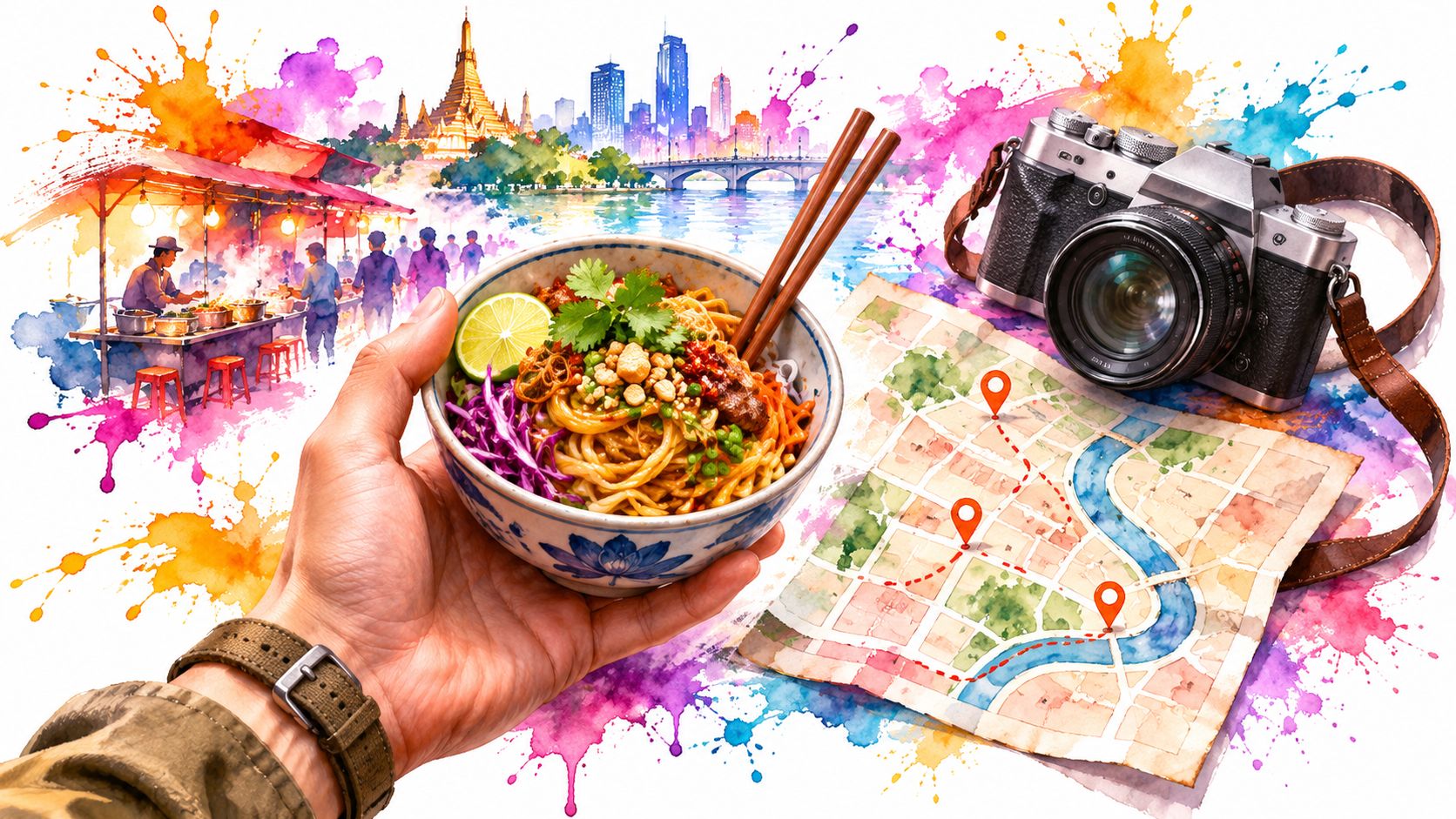
Name the dish and the neighborhood in the caption so the post appears in both food and destination searches. Keep an eye on volume while you test, and the iHatePosting guide to Instagram publishing caps explains how much a single day can realistically carry.
9. Cultural and Heritage Travel Hashtag Sets
Heritage posts carry a responsibility the other nine sets don't. A temple, a festival, or a historic neighborhood is someone's home before it's your content, and the tags you choose decide whether you read as a visitor or a tourist.
Tags also carry less of the discovery load than they used to. Recent analyses of Instagram reach suggest lightly tagged or untagged posts can match heavily tagged ones, because keywords in captions, on-screen text, and the content itself now do more of the search work. For heritage content that's a useful correction: a caption naming the temple, the year it was built, and the etiquette for visiting does more work than #historicsites ever will.
A Kyoto temple set built for search and respect
- The city tag: #kyoto in English, plus the Japanese place name so residents find it too.
- The monument tag: the specific temple or shrine, which is what visitors search before a trip.
- The category tag: #culturaltravel or #japanesetemples.
- The context tag: #architecturelovers when the post is really about the building.
Use the name local people use. A transliteration helps international planners and a locally preferred name signals you know where you are.
If you're unsure how many hashtags per post a heritage carousel needs, go small and put the words into the caption instead.
Verify historical facts with official sources before publishing, add accessibility detail when you have it, and note any photography or dress restrictions in the caption. Repurpose evergreen heritage posts on a recurring schedule so they keep reaching new planners.
10. Winter and Snow Destination Hashtag Sets
Winter travel has the sharpest planning window of any trip type. Ski trips and aurora holidays get decided months ahead, which means the tag that matters in November is the one people searched in September.
Sets that carry a season
- The destination tag: #iceland, #lapland, or #switzerland, paired with a local region where one exists.
- The phenomenon tag: #northernlights for aurora content, #snowtravel for general winter scenes.
- The activity tag: #skitravel or #alpineski, which reaches people booking lessons and passes.
- The season tag: #winterwonderland or #winterholiday for browsers who haven't chosen a country.
A ski-resort carousel tagged #skitravel, #alpineski, and #winterholiday reaches three different planning stages at once. An aurora Reel tagged #iceland, #northernlights, and #winterwonderland does the same for a country-level search.
Start posting winter sets in early autumn and let them build before peak season rather than competing for attention in January with everyone else. Schedule seasonal content in advance so it goes live during the right weeks, and combine aurora or festival tags with location tags so the post sits in both searches.
How the ten travel hashtag set types compare
| Item | Best for | Core tag examples | Typical audience intent | Main risk |
|---|---|---|---|---|
| City Break Hashtag Sets for Urban Destinations | City itineraries, food walks, and street photography | #parisfrance, #citybreak, #montmartre | Finding a city destination, neighborhood, or urban travel inspiration | Crowded tags can bury posts or mix travel with unrelated local content |
| Island and Beach Destination Hashtag Sets | Island trips, beach scenes, and coastal inspiration | #bali, #beachlife, #tropicaltravel | Researching or seeking inspiration for a beach destination | Generic tags attract unrelated posts, and reach varies by season |
| Nature and Outdoor Adventure Hashtag Sets | Hiking, national parks, and outdoor photography | #hiking, #naturephotography, #patagonia | Finding outdoor activities, trails, and nature content | Remote locations may have small audiences, and activity tags can attract non-travel posts |
| Solo Travel Hashtag Sets | Solo travel stories, advice, packing lists, and safety guides | #solotravel, #solotraveler, #solotraveltips | Seeking confidence, planning advice, and travel community | Readers may expect safety guidance; community tags require care |
| Budget and Backpacking Hashtag Sets | Affordable routes, cost breakdowns, and backpacking itineraries | #backpacking, #budgettravel, #hostellife | Researching affordable trips and practical planning details | Prices can become outdated, and some users may only seek free tips |
| Luxury Travel Hashtag Sets | Premium hotels, resorts, and high-end experiences | #luxurytravel, #luxuryhotels, #fivestarhotel | Researching premium trips and luxury stays | Competitive tags and paid promotions can make it hard to stand out |
| Road Trip Hashtag Sets | Route guides, scenic drives, and road trip stories | #roadtrip, #route66, #pacificcoasthighway | Finding routes and practical stop-by-stop itineraries | Tags may overlap with general car content, and route details can change |
| Food and Culinary Travel Hashtag Sets | Restaurant recommendations, local dishes, and food markets | #foodtravel, #tokyofood, #streetfood | Finding dishes, restaurants, and food experiences while planning a trip | Generic food tags draw non-travel posts, and restaurant details can become outdated |
| Cultural and Heritage Travel Hashtag Sets | Historic sites, architecture, museums, and festivals | #culturaltravel, #historicsites, #architecturelovers | Learning about history, art, and local traditions | Niche tags may limit reach; inaccurate historical details can undermine credibility |
| Winter and Snow Destination Hashtag Sets | Ski trips, aurora viewing, and winter destinations | #winterwonderland, #skitravel, #northernlights | Planning or discovering cold-weather trips and seasonal activities | Interest drops outside winter, and remote destinations may have limited search volume |
Turn Your Best Travel Hashtags Into a Repeatable System
Ten sets give you raw material. The system is what you build around them. Pick three or four that match the trips you take, save each one in a named group, and change one or two location tags per post instead of rebuilding from scratch. Swapping #route66 for #pacificcoasthighway turns a road trip set into a different trip while the theme and niche tags stay untouched.
The review that matters is monthly. Open your analytics, sort posts by profile visits and saves rather than likes, and look at which sets brought people who stayed. A tag that delivers views from accounts with no interest in travel is worse than no tag, because it teaches the platform the wrong audience.
What to keep and what to retire
- Keep the sets that produce saves, profile visits, and follows, even when their reach is modest.
- Retire the mega-tags that generate impressions with no downstream action.
- Rewrite the location layer for every new trip instead of editing the whole group.
- Date the cost and price posts and refresh them, since old numbers lose trust fast.
iHatePosting lets you save, refine, and reuse a hashtag set for every post. Its hashtag groups keep your trip-type sets organized, and the visual calendar shows which ones you have used recently, so you can rotate sets instead of repeating the same block on back-to-back posts. Built-in AI tools draft platform-specific captions, hooks, hashtags, images, and short videos, and AI agents can handle the repetitive work of adapting, scheduling, and publishing across your channels while you review and approve each post. No scheduler guarantees reach or followers; what this removes is the blank page and the manual busywork that breaks a posting rhythm.
A hashtag set is small infrastructure. Build five good ones this month and the next trip becomes a matter of swapping a city name.
If you're done hand-building hashtag lists in a notes file, iHatePosting is built for exactly this job. Save a set per trip type, adjust the location tags in the composer, and schedule the post to Instagram and the rest of your channels from one calendar, with AI helping draft captions and tag suggestions along the way. Visit iHatePosting to start a free 90-day trial, connect your accounts, and turn your best-performing travel sets into groups you reuse all year.