Best Social Media Schedulers for Posting to 10+ Networks From One Dashboard (2026): Network Counts Compared
9 min readsocial media schedulersocial media scheduling10 networksiHatePosting
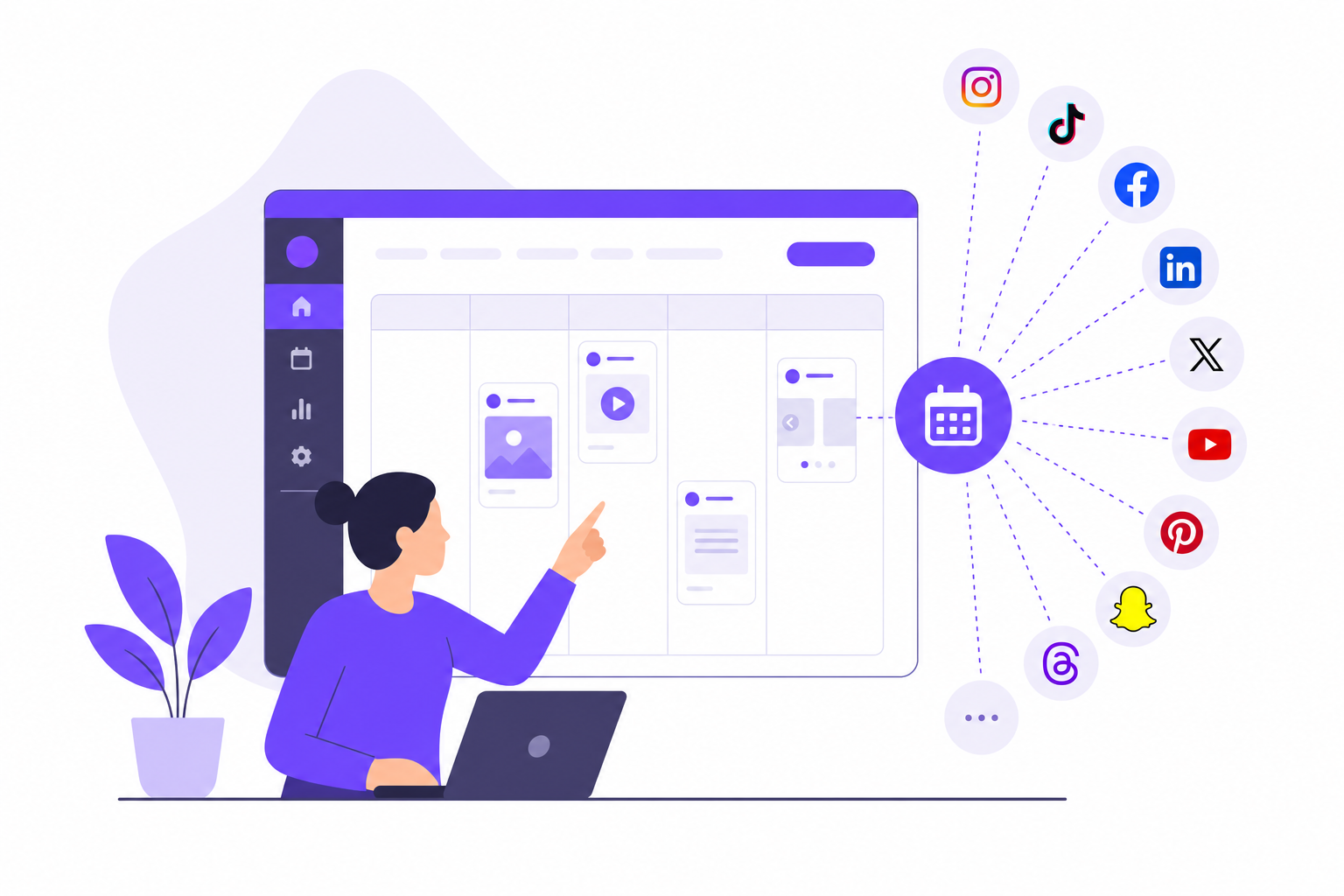
iHatePosting schedules to 14 networks from one dashboard: Instagram, LinkedIn, X, Facebook, TikTok, YouTube, Pinterest, Bluesky, Threads, Mastodon, Telegram, Discord, Tumblr, and Slack.
Most scheduler comparisons count features and stop there. The more useful question for anyone managing a wide account portfolio is: how many networks does this tool actually support, and what does that coverage cost at scale? This article compares seven schedulers on network count, notable gaps, free access, and pricing model so you can match the right tool to your publishing setup.
Network Coverage Comparison: 7 Schedulers at a Glance
| Tool | Networks Supported | Notable Gaps or Notes | Free Option | Pricing Model |
|---|---|---|---|---|
| iHatePosting | 14 | None in listed 14; no unified inbox | 90-day full-featured trial, no credit card | Paid plans coming soon, no price published |
| Buffer | Check site | Check site for current network list | Free: 3 channels, 10 queued posts per channel | Per-channel (~$5/channel/month on Essentials) |
| Metricool | Check site | Check site for current network list | Free: 1 brand, 20 posts/month | From ~$20/month |
| Publer | 13 | X (Twitter) requires a paid plan | Free plan available | Per-workspace/seat; check site |
| SocialBee | Check site | Check site for current network list | Trial available | Check site |
| Postiz | 30+ | Open-source (AGPL-3.0); self-host or cloud | Free self-hosted tier | Check site for cloud pricing |
| Hootsuite | Check site | Check site for current network list | No permanent free plan | Check site |
Network counts and pricing reflect publicly available information as of October 2026. Verify current details on each tool's site before purchasing.
What "10+ Networks" Actually Means in Practice
The number on a tool's marketing page and the number of accounts you can actively use are not the same thing.
Networks vs. connected accounts. A scheduler might support 12 network types but cap connected accounts per plan. If you run three Instagram accounts, that counts as three connections, not one. Buffer's per-channel model makes this explicit: every connected account is a billable channel. Other tools bundle accounts differently, so read the plan limits carefully before assuming "14 networks" means unlimited accounts.
API restrictions by network. Not every network gives schedulers the same publishing access. Some require a native app notification to complete a post. Others restrict certain post formats, video lengths, or reposting intervals through their APIs. A scheduler can list a network as "supported" while only covering a subset of that network's post types.
Post-type coverage matters as much as network count. Scheduling a static image to LinkedIn is straightforward. Scheduling a Reel to Instagram, a Short to YouTube, and a carousel to Facebook from the same composer is a different technical requirement. When your content mix includes video and multi-image formats, check whether the tool supports those formats on each specific network, not just whether the network name appears on the integrations page.
Practical rule: Count the networks where you actually publish today, then verify the tool supports the specific post types you use on each one before treating the headline network number as a reliable comparison point.
Per-Tool Breakdown
iHatePosting
Best for: Creators, solo operators, and small agencies who publish across many networks and want one composer with per-platform caption tailoring, without paying per channel.
iHatePosting supports 14 networks from a single composer: Instagram, LinkedIn, X, Facebook, TikTok, YouTube, Pinterest, Bluesky, Threads, Mastodon, Telegram, Discord, Tumblr, and Slack. You write once and publish simultaneously, with per-platform caption tailoring, live previews, and character counters for each network in the same view.
The feature set covers video formats including Reels, Shorts, and carousels. Bulk scheduling via CSV import handles up to 500 rows. Analytics run back 12 months with CSV export and best-time recommendations. Automation is available through an API, MCP server, webhooks, Zapier, Make, and n8n. Approval workflows and AI writing features are included.
Every new account gets a 90-day full-featured trial with no credit card required and no limits on connected accounts or scheduled posts. This is a time-limited trial, not a permanent free plan. Paid plans are in development and no price has been published yet.
Where it falls short: iHatePosting does not include a unified inbox.
Learn more and start the trial at iHatePosting.
Buffer
Best for: Individuals or small teams managing a modest number of channels who want transparent, predictable per-channel billing.
Buffer's free plan covers 3 channels with 10 queued posts per channel — workable for a single brand, limiting for anyone managing multiple accounts. The Essentials paid plan runs approximately $5 per channel per month. That math stays manageable at 3 or 4 channels; it compounds quickly at 10 or more.
Where it falls short: Per-channel pricing means adding networks or accounts raises your bill proportionally. For a 14-network publishing setup, the cost at the Essentials rate becomes material. Buffer also has MCP support, so that capability is not unique to iHatePosting.
Metricool
Best for: Marketers who want scheduling combined with analytics and competitor tracking in one place.
Metricool's free plan covers 1 brand and 20 posts per month, which is tight for any active publishing schedule. Paid plans start from approximately $20 per month. The platform includes analytics and reporting features that go beyond basic scheduling.
Where it falls short: The free tier's post limit makes it impractical for high-volume scheduling. The exact network count is not verified here; check Metricool's site for the current supported list.
Publer
Best for: Teams who want a broad network list and are comfortable with workspace-based pricing.
Publer supports 13 network types: Facebook, Instagram, X, LinkedIn, Pinterest, Google Business Profile, YouTube, WordPress, TikTok, Telegram, Mastodon, Threads, and Bluesky. That is a wide list, though X requires a paid plan to connect. Publer also supports MCP, so like Buffer and iHatePosting, it fits into automation setups that use that protocol.
Where it falls short: X being locked behind a paid plan is a meaningful gap if you publish to that network regularly. Pricing is per workspace or seat; check Publer's site for current plan details.
SocialBee
Best for: Content recycling workflows and category-based scheduling.
SocialBee is built around content categories and evergreen recycling, which suits teams that repurpose content on a regular cycle. Network count and pricing are not verified here; check SocialBee's site for current details.
Where it falls short: If your priority is raw network count rather than content organization features, SocialBee's category system may add complexity you do not need.
Postiz
Best for: Technical teams or developers who want maximum network coverage and are willing to self-host.
Postiz claims support for 30+ networks and is open-source under the AGPL-3.0 license, meaning you can self-host it without a subscription. On raw network count, it exceeds iHatePosting. The cloud-hosted version has its own pricing; check the Postiz site for current plans.
Where it falls short: Self-hosting requires technical setup and ongoing maintenance. Support and reliability depend on your own infrastructure unless you use the paid cloud version. For non-technical users, the setup cost is real even if the software is free.
Hootsuite
Best for: Larger organizations that need team collaboration, social listening, and reporting in one platform.
Hootsuite is one of the older schedulers in this space and covers a wide range of networks. It does not offer a permanent free plan. Exact network count and current pricing are not verified here; check Hootsuite's site for current details.
Where it falls short: Hootsuite's pricing is positioned for teams and organizations rather than individual creators or small operations. If you only need scheduling and analytics without the collaboration and listening features, you are likely paying for capabilities you will not use.
How to Choose the Right Scheduler for Your Network Count
The comparison table gives you the starting point. Here is how to work through the decision.
Step 1: List the networks where you actually publish. Not the ones you plan to add someday — the ones you post to today, consistently. If that list is 10 or more, you need a tool that supports all of them natively, not through workarounds.
Step 2: Check post-type support on each network. If your content includes video, carousels, or Stories, verify the scheduler handles those formats on every network you listed. A tool that supports 14 networks but only schedules static images to half of them is not a 14-network tool for your use case.
Step 3: Understand the pricing model before you scale. Per-channel pricing works well at low account counts. At 10 or more connected accounts, the math shifts. A flat-rate or trial-based model is generally more predictable for a wide portfolio.
Step 4: Identify the features you actually need. Unified inbox, approval workflows, AI writing, social listening, and content recycling are all real features with real value for specific teams. They also add cost and complexity. If you do not need them, do not pay for them.
Step 5: Use the trial. Most tools on this list offer some form of free access. iHatePosting's 90-day full-featured trial has no credit card requirement and no limits on connected accounts or scheduled posts, which gives you enough runway to run a real publishing workflow before committing.
Frequently Asked Questions
Which social media scheduler supports the most networks?
Postiz claims 30+ networks and is open-source, making it the highest raw network count on this list. iHatePosting supports 14 named networks from one composer. For most creators and small teams, 14 covers every major network they actually use. Postiz is worth considering if your list extends to niche or regional networks.
Does iHatePosting have a free plan?
iHatePosting offers a 90-day full-featured trial with no credit card required and no limits on connected accounts or scheduled posts. This is a time-limited trial, not a permanent free plan. Paid plans are in development and pricing has not been published yet.
What is the difference between "networks supported" and "connected accounts"?
Networks supported refers to the types of platforms a scheduler can publish to — Instagram, LinkedIn, X, and so on. Connected accounts refers to how many individual profiles or pages you can link. A tool might support 14 network types but cap you at 5 connected accounts on a given plan. Always check both numbers.
Does Publer support X (Twitter)?
Publer lists X as a supported network, but connecting it requires a paid plan. It is not available on Publer's free tier.
Can I schedule video content like Reels and YouTube Shorts from these tools?
iHatePosting explicitly supports video formats including Reels, Shorts, and carousels. For other tools on this list, check each tool's current documentation, as video support varies by network and post type.
What does "per-channel pricing" mean in practice?
Per-channel pricing means you pay a fee for each social media account you connect, rather than a flat rate for the whole tool. Buffer's Essentials plan runs approximately $5 per channel per month. At 3 channels that is manageable; at 14 channels the monthly cost is substantially higher. Flat-rate or trial-based models are generally more predictable for wide account portfolios.
If your publishing setup spans 5 or more networks and you want to test a full-featured scheduler without a credit card commitment, iHatePosting's 90-day trial is a practical starting point. No connected account limits, no post limits, and all 14 networks available from day one. Start at ihateposting.com.
Keep reading
 Hootsuite Alternatives That Are Cheaper or Free (2026): Free Plans, Flat-Rate Options and a Hootsuite vs iHatePosting ComparisonNovember 3, 2026
 Buffer vs Later vs Publer vs iHatePosting (2026): Which Social Media Scheduler Is Best for Creators?October 30, 2026
 Best Social Media Management Tools for Creators and Small Teams in 2026: An Honest ComparisonOctober 30, 2026